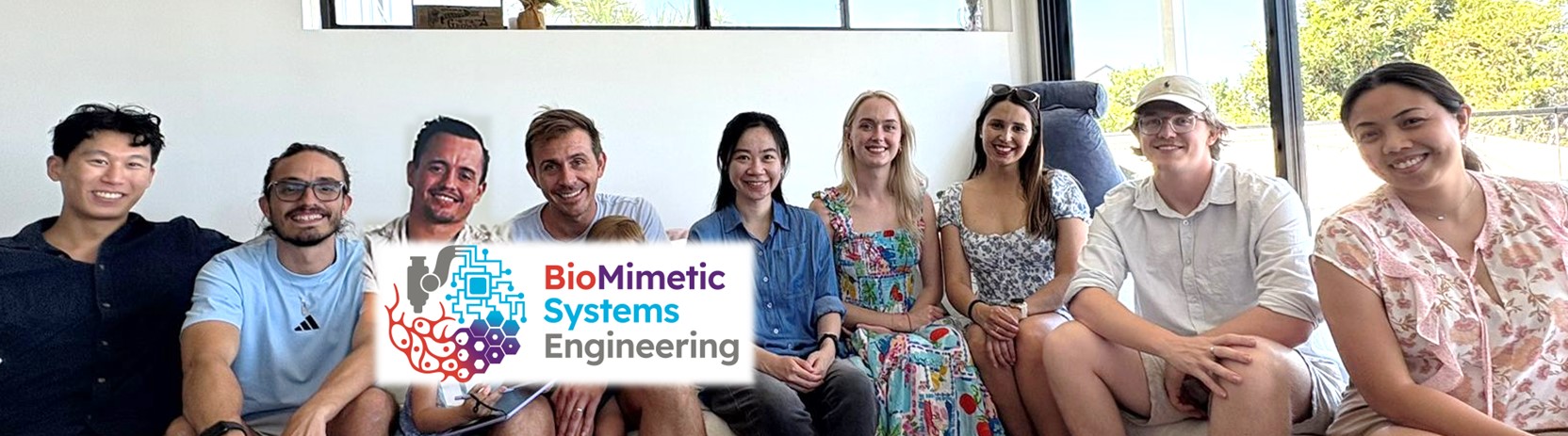
Mark Allenby Lab
Each month, Simply Blood spotlights a lab contributing to the fields of hematology, immunology, stem cell research, cell and gene therapies, and more. Get to know groups doing cutting edge research from around the world! This month, we are featuring the Allenby Lab out of the University of Queensland, Australia.
How long have you had your lab?
4 years.
How many members make up your lab?
We have 8 full-time members, 2 postdocs: Rose Ann and Yoel, 4 PhDs: Chloe, Ryan, Astrid, Thanh Truc, Riley, and honours student Beracah.
What is a major research theme of your lab?
We engineer new tissue culture platforms that replicate aspects of haematopoietic and cardiovascular physiology for cell therapy production or disease modelling.
What is the most exciting project in your lab right now?
Dr Rose Ann Franco has developed methods to grow vascularised immune microtissues completely from a peripheral blood donation, by isolating circulating endothelial progenitor cells and combining them with other immune cells in a hydrogel matrix. This has allowed us to mimic how a microvascular environment from one person might react to another person’s immune cells (allograft) or from the same person (autograft), such as in transplant-associated thrombotic microangiopathy. Now, two new PhD projects will use Rose Ann’s vascularised immune microtissues to answer different biomedical questions.
What advice do you have for new investigators just opening their lab?
When I started our lab, I remember working so frantically to have outcomes. Four years in, we are now seeing the first experimental papers that were completely developed in our lab, and I don’t think it would have helped to try and rush our researchers to publish faster. I would recommend:
- To be patient with results and researchers (difficult in today’s system) your managers will not expect outcomes on day 1, and imparting more stress on your team is likely to harm rather than help.
- To take time in recruiting the best researchers to work with – this is someone you’ll be working with for 4 years.
- Citing Steve Jobs, to take ‘a long-term outlook on people.’ I have seen researchers struggle tremendously in years 1-2, and then deliver outstanding results in years 3-4; I have also seen the opposite. In the right environment, you help your team persevere and evolve into better researchers.
What was the most exciting part about starting your new lab?
Watching your lab discover exciting results, deliver outstanding presentations, and on the multi-year scale, watching them develop as researchers. I get goosebumps when my researchers send me exciting microscopy images over WhatsApp!
Does your lab attend the ISEH annual meeting?
I have fond memories of when I first attended ISEH in Kyoto, Japan, in the middle of my PhD in 2015. I interacted with the society when it came to Brisbane in 2019. We have not attended ISEH since our lab opened – but hope to in future years!
What is the most beneficial aspect of ISEH membership for your lab?
ISEH is rare in its appreciation of more innovative, early-stage experimental results. When I began working on lab-grown red blood cell bioreactors during my PhD, its early development was less positively received by major haematology societies, while ISEH members were interested, supportive, and offered constructive criticism.
How do members of your lab celebrate accomplishments?
We have gone for drinks at the local university bar.
Does your lab have any fun traditions?
Lab barbecues and birthday cakes!
Blog post contributed by Kavita Bisht of the ISEH Publications Committee.
Please note that the statements made by Simply Blood authors are their own views and not necessarily the views of ISEH. ISEH disclaims any or all liability arising from any author's statements or materials.