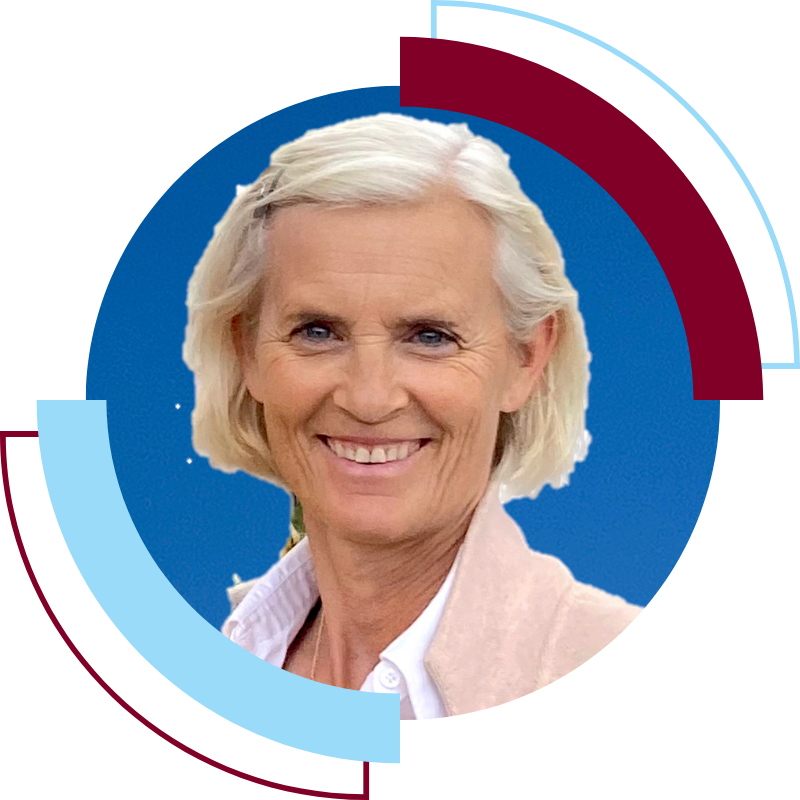
Dr. Camilla Forsberg is a Professor of Biomolecular Engineering and Director of the Institute for the Biology of Stem Cells (IBSC) at the University of California, Santa Cruz (UCSC). She earned BS degrees in Chemistry from the University of Sundsvall (Sweden) and Central Florida and her PhD in Molecular and Cellular Pharmacology from the University of Wisconsin-Madison, followed by postdoctoral training in developmental and stem cell biology with Dr. Irving Weissman at Stanford University. She joined UCSC as an Assistant Professor in 2007 and has directed the IBSC since 2012. In 2015, Camilla was promoted to Full Professor. Camilla has been deeply engaged with ISEH throughout her career and has served terms on the Board of Directors, on the Nominations Committee, on the Editorial Board of Experimental Hematology, and, since 2021, on the ISEH committee for Awards in Diversity, Equity, and Inclusion and Leadership, for which she helped to develop the framework.
As Director of the IBSC, Camilla has built a portfolio of training programs designed to open pathways into science for underrepresented students and postdocs, including an NIH IRACDA program run jointly with the Hispanic-Serving California State University (Monterey Bay, CA), a co-led NIH T32 postdoctoral training grant, and CIRM-funded training programs for graduate students and postdocs. She has paired this institutional work with hands-on mentorship. For example, she has mentored PhD students who have received the HHMI Gilliam Fellowship, which supports joint mentor-mentee training for underrepresented groups. Working in concert with this trainee, she co-founded the Graduate Student Council for UCSC's Program in Biomedical Sciences and Engineering to give students a formal voice in their own education. Most recently, Camilla has extended her efforts for inclusivity to an international level, by visiting research institutions in Kenya and supporting students there to prepare competitive applications for PhD programs in the USA. She is also a faculty mentor member of AuthorAID, a global supportive network for researchers in low- and middle-income countries.
Colleagues describe her as a mentor who treats cultural awareness as a practiced, ongoing skill rather than a checkbox, and her trainees' track record bears this out: over the past five years, every trainee in her lab has secured a predoctoral or postdoctoral fellowship. Congratulations, Camilla, on this well-earned recognition!