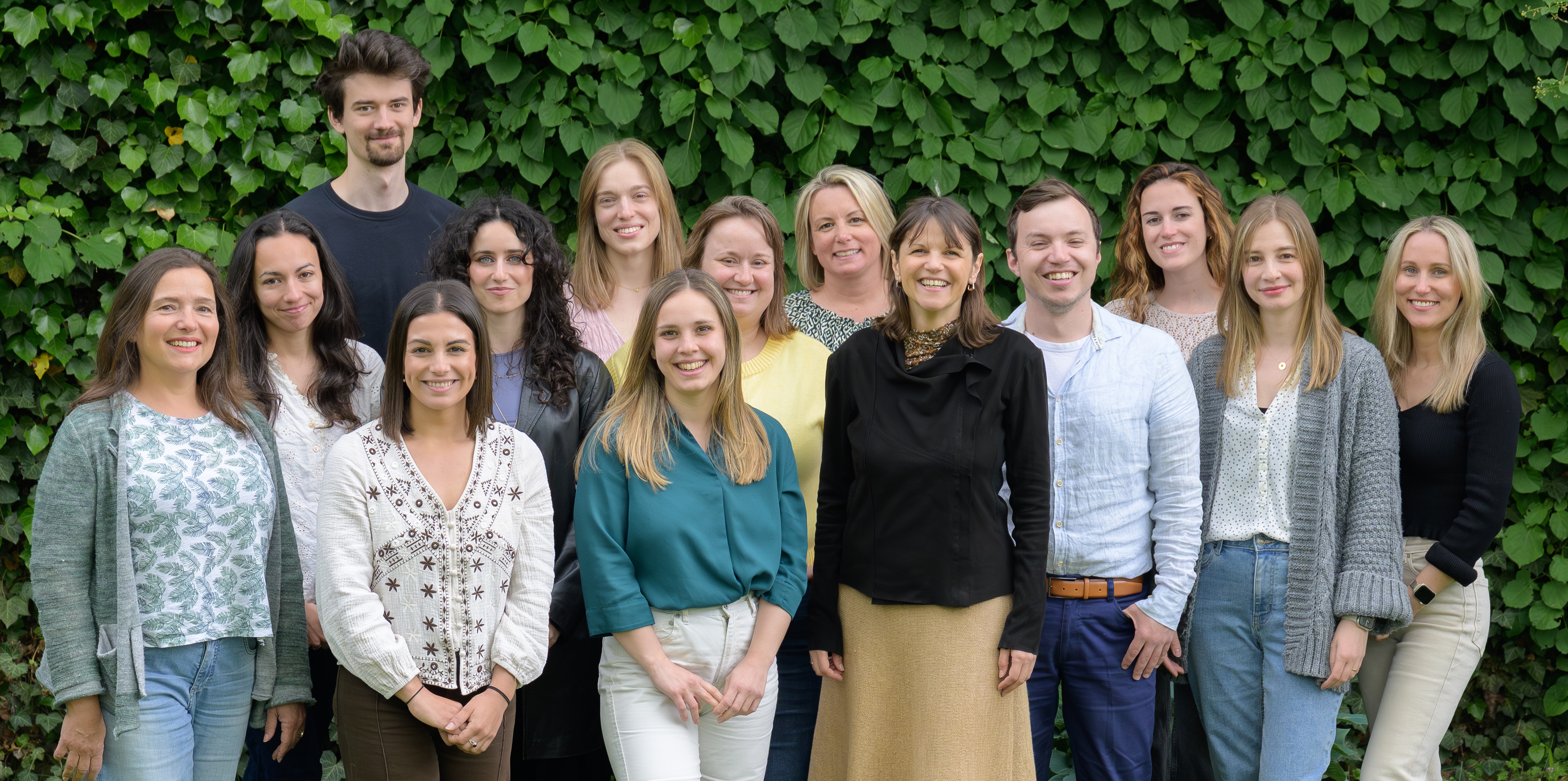
The Cabezas-Wallscheid Lab
Each month, Simply Blood spotlights a lab contributing to the fields of hematology, immunology, stem cell research, cell and gene therapies, and more. Get to know groups doing cutting edge research from around the world! This month, we are featuring the Cabezas-Wallscheid Lab out of ETH Zürich - Swiss Federal Institute of Technology.
How long have you had your lab?
I started my lab in 2017.
How many members make up your lab?
We are around 10 to 12: 4 PhD students, 4 postdocs, 1 lab manager, 2 master students.
What is the major research theme of your lab?
Overall, our research focuses on the metabolic and epigenetic regulation of hematopoietic stem cells (HSCs) in homeostasis, ageing, Acute Myeloid Leukemia (AML), and in response to nutritional interventions.
What's the biggest accomplishment your lab has had recently?
Scientifically, I would say our recent work on assessing the metabolic changes occurring in human bone marrow HSCs during differentiation, ageing, and AML, as well as our study on the dampening of stress-induced inflammation through the regulation of HSC quiescence in the context of myocardial infarction, both published in Nature Cell Biology. Another important achievement has been securing several major grants, including a European Research Council Consolidator Grant.
On a team level, a major accomplishment has been bringing the lab back together after a period split between Freiburg (at the Max Planck Institute, where I was a group leader) and Zürich (where I started as a full professor). Reuniting the team and now being close to fully establishing the lab in Zürich has been a very meaningful milestone that we all deeply appreciate
What is the key to running a successful lab?
I believe the key is creating a transparent, collaborative, and positive environment, while actively supporting each lab member in their scientific journey.
What advice do you have for new investigators just opening their lab?
I was advised early on that the first hire really matters, and I can only fully agree. That first person helps set the standard, the culture, and the overall environment of the lab. It’s worth taking the time to find the right people rather than rushing the process. Building a positive, collaborative atmosphere from the beginning makes a huge difference.
What was the most exciting part about starting your new lab?
Everything, honestly. All the small milestones felt exciting: from getting our first pipetman (I still remember that moment with Katharina Schönberger the first student), to seeing the first colonies growing on a plate from Julian Mess, to watching each lab member grow scientifically alongside the lab.
Does your lab attend the ISEH annual meeting?
Yes, absolutely. Not only attending, but also actively participating. For instance, Jasmin Rettkowski is part of the NIC committee, which is particularly exciting, as I was myself a member during my postdoc years and truly enjoyed the experience of learning about the work happening behind the scenes of organizing the Annual conference, Webinars.
What is the most beneficial aspect of ISEH membership for your lab?
The regular webinars, the blogs and the ISEH Annual Meeting.
How do members of your lab celebrate accomplishments?
We usually celebrate achievements in the lab with food and drinks! I believe it is important to value every small step forward and to genuinely celebrate each other’s accomplishments. One particularly proud PI moment for me was when two of my PhD students recently chose to share an award voluntarily, even though it had officially been given to only one of them.
Does your lab have any fun traditions?
The lab prepares a fun graduation hat for every PhD student, filled with memories and highlights from their PhD journey. We also organize an annual retreat, a Christmas party, and group activities such as escape rooms, laser tag, and others. These moments are a great way for us to celebrate achievements together and strengthen the sense of community within the lab.
Blog post contributed by Wenjuan Ma of the ISEH Publications Committee.
Please note that the statements made by Simply Blood authors are their own views and not necessarily the views of ISEH. ISEH disclaims any or all liability arising from any author's statements or materials.