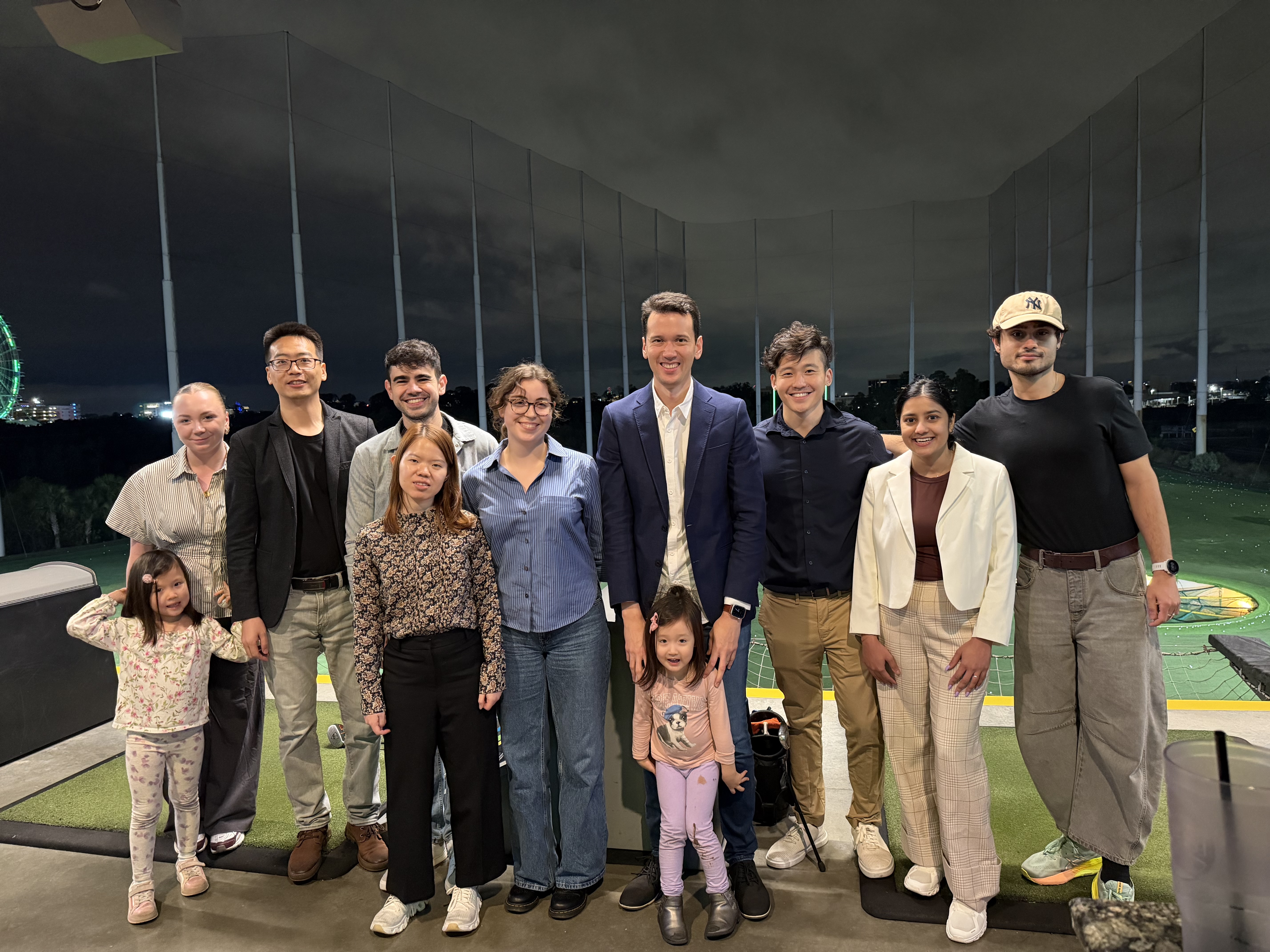
The Wagenblast Lab
Each month, Simply Blood spotlights a lab contributing to the fields of hematology, immunology, stem cell research, cell and gene therapies, and more. This month, we are featuring the Wagenblast Lab out of the Icahn School of Medicine at Mount Sinai.
The Wagenblast Lab studies one of the mysteries in cancer biology: why some leukemias begin before we are even born. By combining genome engineering, single-cell genomics, and human blood stem cell models, the lab reconstructs how normal hematopoietic stem cells evolve into pre-leukemia and ultimately into aggressive childhood and adult leukemias. Their work sits at the intersection of developmental biology, stem cell biology, and cancer evolution, with a strong emphasis on translating basic discoveries into new therapeutic strategies.
How long have you had your lab?
The Wagenblast Lab officially opened in June 2022, so we are now in our fourth year.
How many members make up your lab? Students/postdocs?
We are a team of about 8 people, including three postdoctoral fellows, one PhD student, two bioinformaticians, and two support staff.
What is the major research theme of your lab?
We study human pre-leukemia and leukemia, with a focus on how blood stem cells transform into cancer during development, especially in children.
What's the biggest accomplishment your lab has had recently?
Our biggest recent milestone is our Cancer Discovery paper, published in December 2025, showing that the same leukemia mutation behaves very differently depending on when in development it occurs. Using human prenatal, cord blood, and adult blood stem cells, we demonstrated that early-life stem cells are uniquely vulnerable to transformation by the NUP98-NSD1 fusion oncoprotein, while later stem cells resist it. This work helps explain why certain leukemias almost exclusively occur in children and why they respond differently to therapy.
What facilities or equipment does your lab absolutely depend on?
Our lab lives and breathes human blood stem cells and flow cytometry. We use flow cytometry every day to purify rare stem and leukemia-initiating cells, and having our own cell sorter allows us to work quickly, reproducibly, and at the single-cell level. Without that capability, most of our experimental models simply would not exist.
What's your best approach to mentoring students in the lab?
One thing I learned early is that no two trainees need the same mentoring style. Some people thrive with independence, others benefit from more structure, and part of my job is figuring out what helps each person do their best science. As a young principal investigator, I am still refining that balance, but building trust and tailoring mentorship is central to our lab culture.
What advice do you have for new investigators just opening their lab?
Don’t run projects alone, build teams around each question. Complex biology moves much faster when multiple people with complementary skills push it forward together. Investing in collaboration early saves time, makes the science stronger, and also more fun!
Does your lab attend the ISEH annual meeting?
Yes, ISEH has become a regular part of our lab’s scientific life. One of our postdocs attended the meeting in Japan last year, and the whole lab went to Brooklyn in 2023. We are especially excited for ISEH in Frankfurt, which feels like a homecoming given our strong European ties, including Elvin’s roots in Germany and several lab members from Europe.
What is the most beneficial aspect of ISEH membership for your lab?
The ISEH community is what really stands out. Between the annual meeting, online workshops and seminars, it is one of the best places to exchange ideas about stem cells, leukemia, and experimental hematology. For a lab working at the intersection of development, cancer, and human stem cells, ISEH feels like home.
How do members of your lab celebrate accomplishments?
With a bottle of champagne. We write the achievement and everyone’s name on the bottle and keep it on display, a tradition I inherited from my postdoc mentor, John Dick.
Does your lab have any fun traditions?
We have an annual lab retreat, twice on Fire Island and last year in Orlando, where science takes a bit of a back seat and team bonding, good food, and lots of fun take center stage.
Blog post contributed by John Crispino, PhD, MBA of the ISEH Publications Committee.
Please note that the statements made by Simply Blood authors are their own views and not necessarily the views of ISEH. ISEH disclaims any or all liability arising from any author's statements or materials.