Photo credit: Natalia Alvarez Palma
Research is at its most powerful when it is shaped alongside those who understand the disease from the inside. Patients living with leukemia, lymphoma, or myelodysplastic syndromes carry a form of expertise that no laboratory measurement fully captures, the lived experience of diagnosis, treatment, and recovery. Increasingly, the research community is recognizing that this expertise belongs not only in clinical encounters, but in the earliest stages of research. And here is the good news for students and early-career researchers: you do not need a faculty position or a formal programme to start building that bridge.
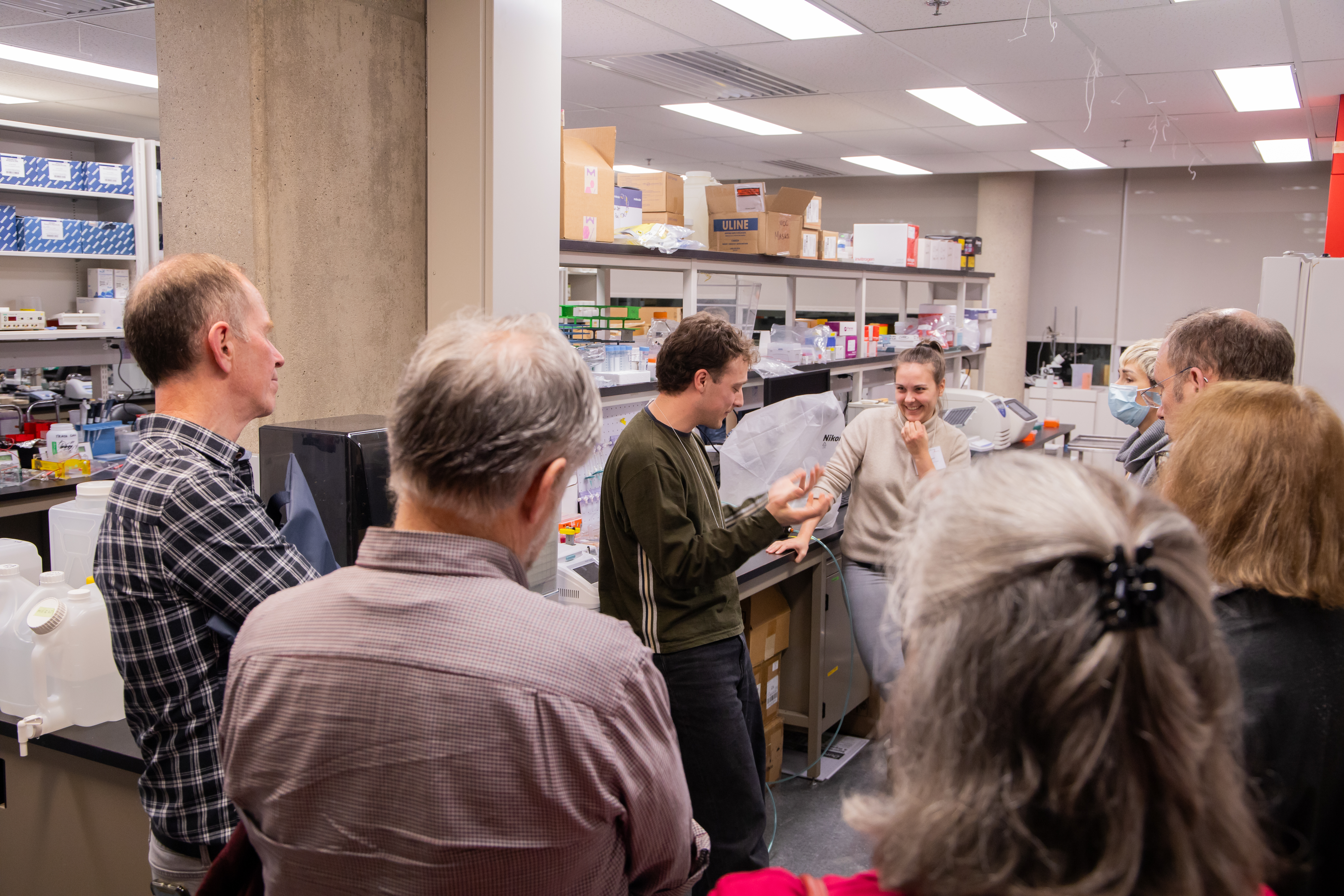
Our experience, hosting a night at our institute:
Last semester, a group of graduate students at the Institut de Recherche en Immunologie et Cancérologie (IRIC), Université de Montréal, organized an evening bringing patients living with or who have been treated for blood cancers into the heart of the institute. Patients toured active laboratories to explore the different approaches we used at our institute to target blood cancers, visited proteomics and genomics platforms, and sat down with students and scientists from several research groups for an open exchange. Researchers shared their scientific work and how fundamental research uncovers key features of blood cancer, and patients shared their personal journey through diagnosis and treatment.
The result was not a formal consultation or a structured focus group, but a genuine conversation. Both sides left with something they did not have before. Patients expressed real enthusiasm for discovering how a research institute actually works, the organisation of a laboratory, collaborations between teams, the platforms and technologies, and the daily reality of a scientist's work, which remains largely invisible to the outside world. Many had never imagined the scale and complexity of the effort happening behind the scenes of the treatments they had received. For the students who presented their work that evening, the impact was tangible and immediate. Fundamental research can feel abstract, since the distance between a molecular mechanism and a patient outcome is long, and it is easy to lose sight of why it matters. Hearing directly from patients about their experience with diagnosis, treatment, and daily life with the disease you study changes that. The students left the evening reminded, in the most human way possible, of the purpose behind their work. That kind of motivation is hard to manufacture in a group meetings, and it remains with you. The entire event was conceived and run by PhD and master's students with the support of the PI’s and the Leukemia & Lymphoma Society of Canada to help us reach out to patients.
Five ways to include patients at your level:
You do not need to wait until you establish your own lab. Here are concrete steps that students and postdocs can take right now:
- Invite patients into your lab. A tour, a conversation, an evening, informal contact builds mutual understanding and often sparks ideas that no literature review would surface.
- Connect with a patient advocacy organisation early. Groups focused on leukemia, lymphoma, MDS, and other blood disorders are actively looking for researchers to engage with. A single email can open a lasting relationship.
- Ask a patient to review your lay summary or consent form. Plain-language communication is a skill, and patients are its best editors. Most disease advocacy organisations can connect you with willing volunteers.
- Bring a patient perspective into your lab meetings or to give a talk at your institute. Even occasionally inviting a patient speaker to share their experience can shift how a team thinks about the relevance of its work.
- Advocate within your institution. If your department or institute does not yet have a patient engagement framework, say so, and offer to help build one.
The 2024 revision of the Declaration of Helsinki now frames patient engagement as an ethical requirement in research, not an extra option. Funding agencies are following suit. But beyond policy, the case is simple: patients are the most important stakeholders in the research we do. The earlier in your career you start including them, the more naturally it will shape the kind of researcher you become.
Blog post contributed by Fanny-Meï Cloarec-Ung of the ISEH New Investigators Committee.
Please note that the statements made by Simply Blood authors are their own views and not necessarily the views of ISEH. ISEH disclaims any or all liability arising from any author's statements or materials.