In a recently published review in Experimental Hematology, Dr. Bonifer provides an overview of the genetic mechanisms underlying developmental hematopoiesis, emphasizing the strengths of ESC- and iPSC-based systems. Hematopoietic cells originate from mesoderm during embryogenesis. Through a process known as endothelial-hematopoietic transition (EHT), hematopoietic stem cells capable of sustaining lifelong blood production are generated. Understanding the molecular regulation of these processes is critical, given their disruption in diseases such as leukemia and bone marrow failure.
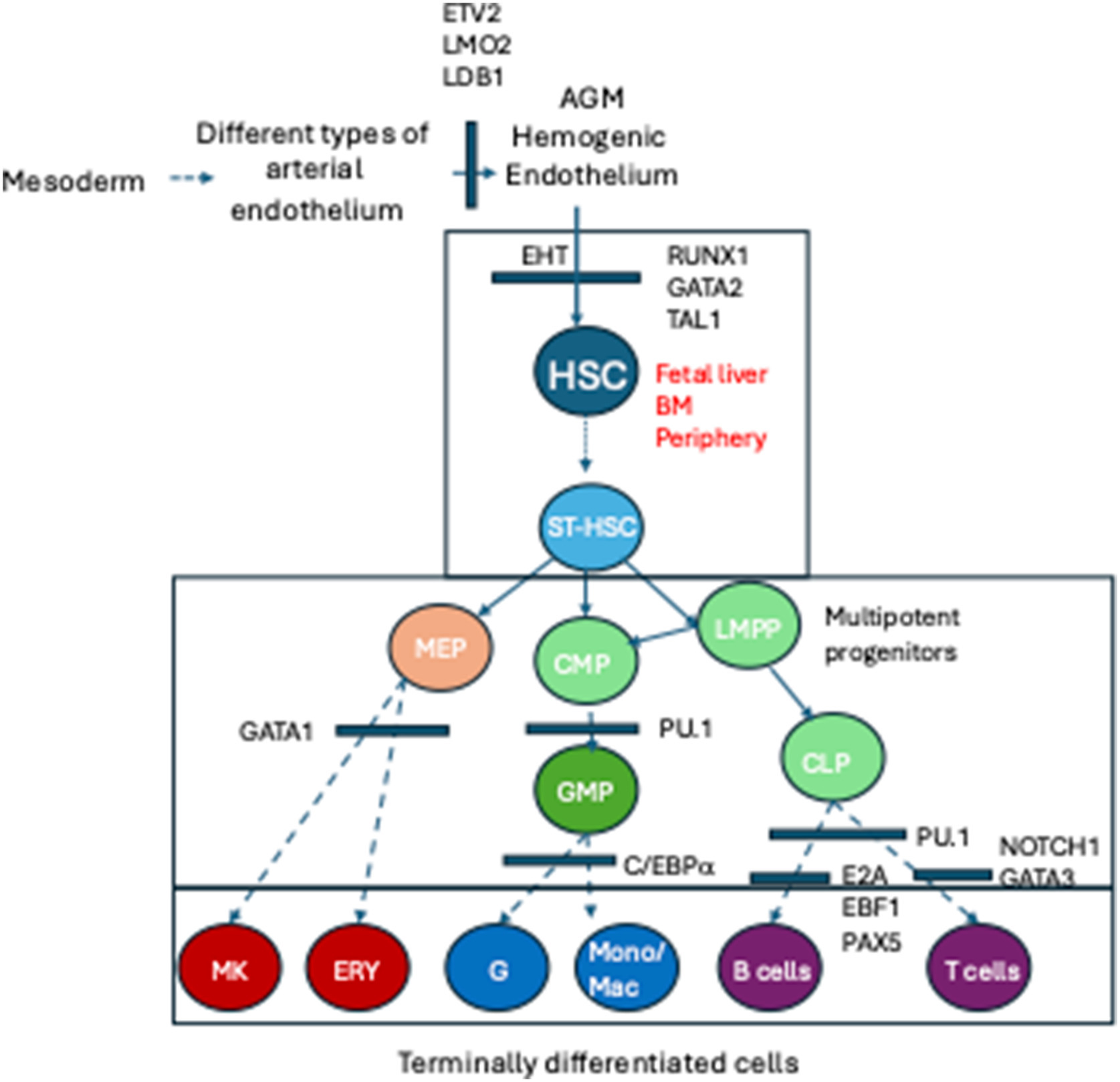
The review highlights how ESC- and iPSC-based models, which allow for genetic manipulation and large-scale cell generation, have become powerful tools to dissect the genetic regulation of hematopoiesis. Key themes include how transcription factors interact with regulatory components to drive specific gene expression and how signaling pathways and growth factors can modulate these regulatory networks.
Dr Bonifer summarizes both her own work and that of others to illustrate how ESC- and iPSC systems have advanced our understanding of the genetic and chromatin-based control of normal and malignant hematopoiesis.
Don’t miss this newly published and timely review in Experimental Hematology.
Blog post contributed by Charlotta Böiers, PhD of the ISEH Publications Committee.
Please note that the statements made by Simply Blood authors are their own views and not necessarily the views of ISEH. ISEH disclaims any or all liability arising from any author's statements or materials.